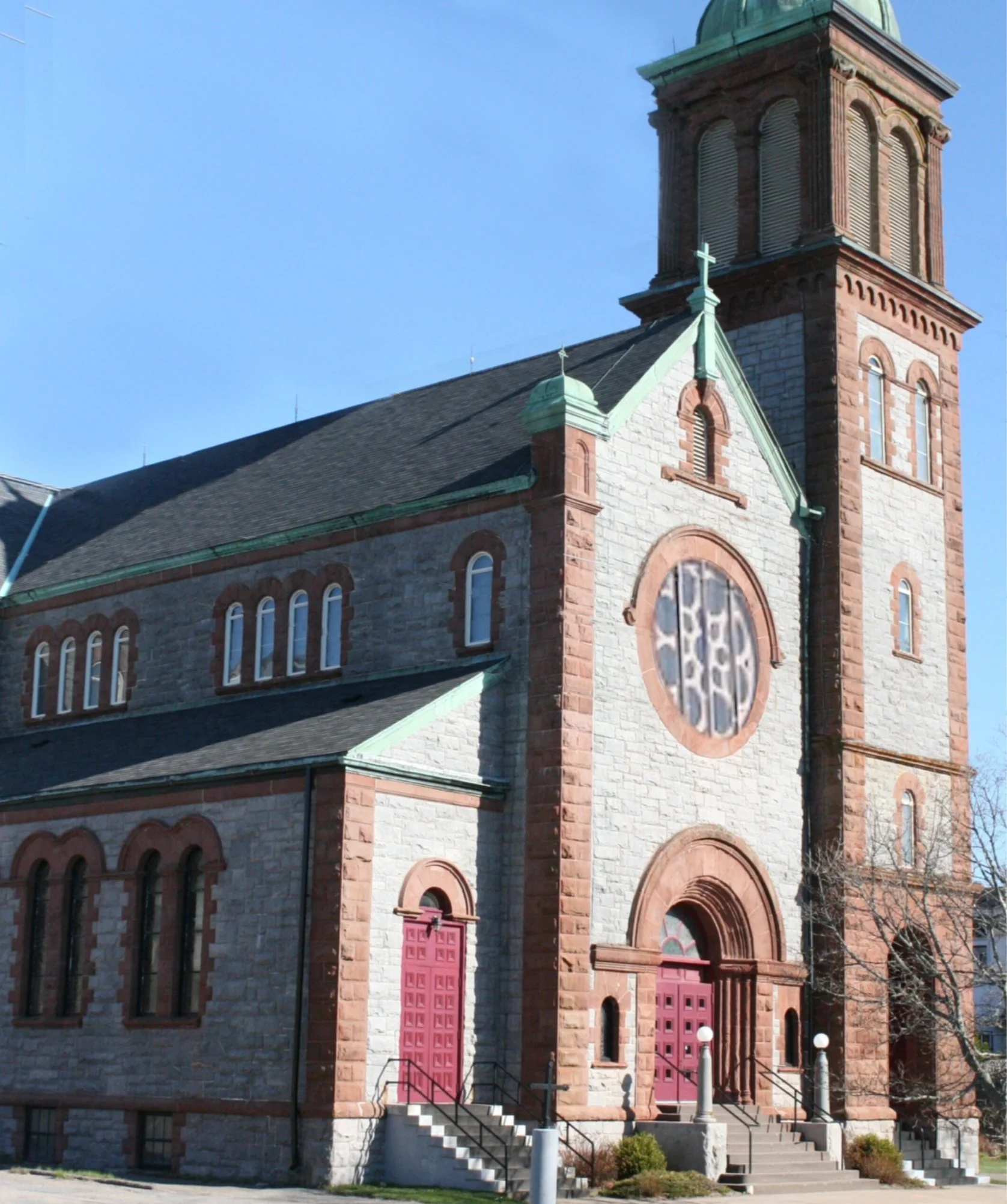
Sunday Liturgy
Saturday: 5:00 pm
Sunday: 11:00 am
Mission Statement
We are a welcoming Christian community called to embrace and respect the uniqueness of each individual as we join together in our faith and worship. Our ongoing mission is to engage our youth, promote renewal, out reach, evangelization and ecumenical cooperation.MASS INTENTIONS FOR THE WEEK
Monday, October 26th – 9:00 am No Mass
Tuesday, October 27th – 9:00 am Doris Duguay (Anniv)
Wednesday, October 28th – 9:00 am Marjorie Lawton (Anniv)
Thursday, October 29th – 9:00 am Martha Peddle
Friday, October 30th – 9:00 am No Mass
Saturday, October 31st – 4:00 pm Olive/Wilfrid Bowlin & DMF
Sunday November 1st – 11:00 am Hector LeBlanc
PLEASE NOTE: Beginning Saturday, October 31st, Mass will be celebrated at 4:00 pm.
20th Sunday in Ordinary Time (A) 2026
There is a line from John Lennon’s classical song, Imagine that has echoed through generations:
“You may say I’m a dreamer, but I’m not the only one…”
Lennon once said the song was meant to be a kind of positive prayer... an invitation to imagine a world without barriers, without divisions, without the walls we build between nations, religions, and people. A world living life in peace. He called it imagining one universal God.
To imagine is a gift. It is the ability to picture something not yet seen, to form new ideas and new possibilities. The Latin imaginari means “to picture oneself.” And in prayer, imagination is powerful. It opens the heart to God’s vision.
In today’s First Reading, Isaiah imagines something too: a world where God’s chosen people are not limited to one culture, one nation, or one religion. Isaiah sees a holy mountain where all people ... from every walk of life, every condition, every background ... are welcomed. No barriers. No exclusions. No questions asked.
It is God’s imagination breaking into human history.
Then we come to the Gospel. Jesus meets a Canaanite woman ... someone considered an outsider, someone the Jewish people would have dismissed. At first, Jesus seems harsh. He ignores her. He even appears to refuse her. And the crowd would have loved that, because they disliked the Canaanites.
But she is a mother with a sick child. She is desperate. And she is determined. So she kneels ... placing herself in a vulnerable posture ... and calls Jesus “Son of David.” She knows who He is. She believes He is the Messiah for all people.
Jesus says, “I have come only for the lost sheep of Israel.” But in this encounter, something shifts. Jesus recognizes the greater scope of His mission. Her faith breaks open the borders. Her trust expands the imagination of the disciples ... and perhaps even of Jesus’ own human understanding of His mission.
And He heals her daughter. “Great is your faith.”
How Do We Fit Into This Story?
This Gospel asks us to examine our own attitudes, our own images of others, our reactions to people who challenge us. How do we treat the the helpless or those who struggle for approval ? Do we avoid them? How do we respond to those who have hurt us ... through gossip, betrayal, or ignorance? Often, what we dislike in others is what we fear or dislike in ourselves.
When we meet those who are “unacceptable” to us, we are confronted with our own vulnerability and brokenness. And before God, we are all like this unnamed woman ... kneeling, pleading, hoping, believing.
When we come into this church, are we not like her? When we stretch out our hands for Communion (another vulnerable posture) are we not saying, “Lord, help me... I need you”? Do we not long to hear Jesus say to us, “Great is your faith”?
Today we celebrate Our Lady of the Assumption, the patroness of our parish. Mary is the one who lived God’s imagination perfectly. In her, God’s dream for humanity is fulfilled: a life lifted into glory, body and soul, a sign of what God desires for humanity.
Mary shows us what it looks like when a human life is completely open to God ... no barriers, no fear, no division. She is the woman of welcome, the mother of all believers, the one who gathers the whole world under her mantle.
Imagine ... just imagine ... what our parish could be if we lived like her. Imagine a community where every person is welcomed. Imagine a parish where leadership is shared, where gifts are encouraged, where prayer shapes our mission. Imagine homes, workplaces, and neighbourhoods where God’s inclusive love breaks down walls. Imagine… and Believe
Lennon sang:
“I hope someday you’ll join us, and the world will be as one.”
Isaiah imagined it. The Canaanite woman believed it. Mary lived it. And Jesus calls us to build it. Imagine…
and let God make it real.
Amen.
AT BOBBY’S HOSPICE, every day is about providing comfort, dignity, and compassionate care to patients, and their families during some of life’s most difficult moments.
Because Bobby’s hospice is available to our community at no charge, the generosity of our community means so much.
Right now we are in need of patient care items and cleaning supplies.
If you would like a tax receipt, please email your receipt to reception@hospicesj.ca or bring it with you when you drop off your donation.
COSTCODOLLARAMA
13 Gallon Drawstring kitchen Garbage Bags Lysol Spray
Mr. Clean Toilet Bowl Brush
Toilet Paper Toilet Paper
Paper Towel Paper Towel
Scrubbing Bubbles Dryer Sheets
Gilette Razors Dish Soap
Lip Balm Lip Balm
Deodorant Deodorant
Dawn Dish Soap
Soft Soap (Hand Soap
Dryer Sheets
Laundry Detergent
** From all of us at Bobby’s Hospice, thank you for being part of our community of care.